Awarding fellowships to journalists to pursue independent projects of significant interest and skepticism that will benefit the public.
Apply for a Fellowship
Applications are now open for independent writing projects funded by the Alicia Patterson Foundation. The fellowship grants, either 12 months ($40,000) or 6 month ($20,000), allow you to do independent research and writing on a topic of your choosing. At least one fellowship is aimed at science and environmental coverage. Your application must be completed by October 1.
Please send in your application early – Early submissions are much appreciated.
2026 Fellows
61st Annual Fellowship Winners
Stan Alcorn
James Asher
Jessica Baltzersen
Austyn Gaffney and Anna Watts
Natasha Gilbert
Stefan Lovgren
Alexandra Talty
Apply for a Fellowship
Applications are now open for independent writing projects funded by the Alicia Patterson Foundation. The fellowship grants, either 12 months ($40,000) or 6 month ($20,000), allow you to do independent research and writing on a topic of your choosing. At least one fellowship is aimed at science and environmental coverage.
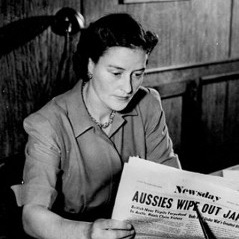
Alicia Patterson
Alicia Patterson reluctantly became a newspaper publisher in 1940. Her husband wanted to keep her busy and she wanted to show her accomplished father that she could be as good a journalist as he was. From that timid start she created Newsday, the most successful new daily newspaper of the postwar period.
Our Mission
To promote and sustain the best traditions of American journalism, the Alicia Patterson Foundation supports journalists engaged in rigorous, probing, in-depth reporting. Through its fellowships, the foundation works to foster a community of independent journalists committed to informing the public truthfully on significant issues around the world.
Donate
For over five decades, the Alicia Patterson Foundation has been giving top journalists the time away from daily deadlines to pursue stories of significance that have changed policies, illuminated problems and educated the public. The cost of in-depth reporting and the shrinking size of newsrooms has made the support of APF even more critical for an informed society.
Current Fellows 2026
Stan Alcorn, an investigative journalist based in Colombia who worked for seven years at the Center for Investigative Reporting’s weekly national public radio show, Reveal. His stories for Reveal inspired changes in law and the deplatforming of a hate group; were taught in university classrooms and cited in Congress; and won honors including a Peabody Award, an NABJ Salute to Excellence Award and a finalist designation for the Livingston Award for Young Journalists. Prior to Reveal, Alcorn was a staff reporter at Marketplace, WNYC and Fast Company, and he helped create the website that’s now GCJT.org, an online resource for journalists who cover violence.
James Asher, a veteran investigative journalist and Pulitzer Prize-winning editor who has worked as a reporter and editor at five newspapers on the East Coast, including The Philadelphia Inquirer and The Baltimore Sun. In 2002, he served as national investigative editor for Knight Ridder and later ran McClatchy’s Washington Bureau. In 2017, Asher shared a Pulitzer Prize for his work on the global Panama Papers document leak about off-shore tax havens. He edited four other projects that were Pulitzer Prize finalists. Currently, he is working with Public Health Watch, a national news outlet that covers environmental issues, and he is a consultant for the Investigative Reporting Workshop at American University.
Jessica Baltzersen, an Ohio-based freelance journalist who writes about science, nature and wildlife conservation. Her work has appeared in National Geographic, The Guardian and Sierra Magazine, among others. Baltzersen has an MA in English from Northern Kentucky University and serves on the board of the Outdoor Writers Association of America.
Austyn Gaffney, writer, and Anna Watts, photographer, who are working together on a fellowship project.Gaffney reports largely on climate science, natural disasters and the energy industry. She was previously a fellow on The New York Times climate desk and an environmental reporter for VTDigger, a nonprofit newsroom in Vermont. Her work can be found in The Atlantic, Grist, High Country News, National Geographic, The New York Times, Rolling Stone and The Washington Post, among others. Watts’s freelance photography examines how systemic forces shape individual lives across politics, climate, healthcare, housing, immigration and labor. Watts is a frequent contributor to The New York Times, and has been published in The Washington Post, The Wall Street Journal, The Guardian, Los Angeles Times and ESPN, among others.
Natasha Gilbert, a freelance investigative journalist based in Washington, DC, whose work digs into the corporate and political forces undermining people’s health, the environment and sustainable food systems. Gilbert’s work has been published by Public Health Watch, Type Investigations, The Guardian and Nature, among others. Her past investigations have uncovered industry lobbying against safeguards of toxic drinking water contaminants, prescription drugs leaking out of factories and polluting U.S. waterways, and drug and water companies derailing environmental regulation in Europe.
Stefan Lovgren, an award-winning journalist and filmmaker with more than 25 years of worldwide reporting experience. He writes about freshwater issues globally and is a frequent contributor to National Geographic and other media. He is the author of four books, including “Chasing Giants: In Search of the World’s Largest Freshwater Fish.” Lovgren has a master’s degree in international affairs from Columbia University, and he currently lives in Las Vegas.
Alexandra Talty, an American ocean journalist based in Asia who investigates stories where business meets the sea. Covering climate and fisheries across four continents, her work appears in The New York Times, The Guardian and WIRED Magazine, among others. Past fellowships and support include the Pulitzer Center Ocean Reporting Network, Journalismfund Europe, Knight-Wallace and the National Press Foundation for Food and Agriculture. Talty’s 2023 investigation into the American seaweed industry received honorable mentions from SABEW (the Association of Business Journalists) and the American Society of Journalists and Authors. In 2018, she received an L.A. Press Club award for her work covering LGBTQ+ rights in Lebanon, and in 2015 she was the founding Editor-in-Chief of StepFeed in the Middle East.

Inside the audacious mission to bring a rare toad back from the brink
The amphibian “IVF clinic” fighting to save the first amphibian ever afforded federal protections. Strings of eggs from breeding pairs of the Houston toad at the Fort Worth Zoo are prepared for release into a pond at Griffith League Ranch.
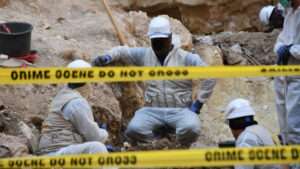
Unearthing the past: Iraq’s mass graves and the quest for justice
Workers exhume the remains of bodies from a mass grave, presumably where Turkmens from Tal Afar were killed between 2014 and 2017 when ISIS controlled the region, Tal Afar district, Iraq, July 2024Image by picture alliance / Anadolu / Ali

She Managed to get a Temporary Farmworker Visa
She managed to get a temporary farmworker visa. Once in the U.S., she endured abuse and exploitation.agricultural labor where they face sexual violence and trafficking. A Prism investigation reveals that women are routinely shut out of the H-2A program, and
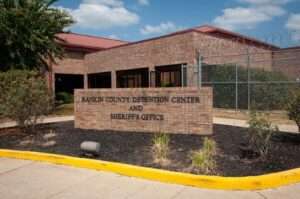
‘They Beat Me Like a Slave’: Signs of Violence in Sheriff’s Office Dated Back Years
The F.B.I. and a Mississippi sheriff investigated complaints about brutal assaults, but the deputies accused remained on the force and never faced charges. By Nate Rosenfield and Mukta Joshi Nate Rosenfield and Mukta Joshi are reporters for Mississippi Today. They examined the power
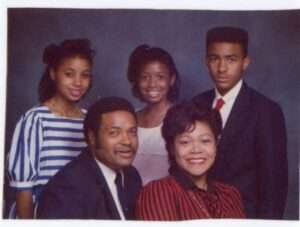
Unlocking the Gates: How the North Led Housing Discrimination in America
Original release: February 12 2025 In this gripping follow-up to his award-winning podcast What Happened in Alabama?, Alicia Patterson Fellow Lee Hawkins exposes how Northern developers, brokers and legislators engineered a nationwide system of housing apartheid. Drawing on newly unearthed deeds, newspaper
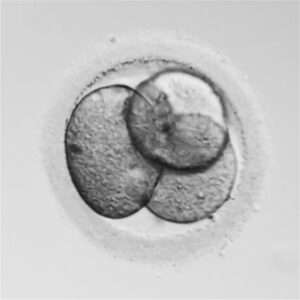
Opinion | Are Embryos Property or People? Even the Courts Don’t Know
OPINION Are Embryos Property? Human Life? Neither? The Embryo Question is a three-part series about the cluster of cells at the crossroads of science, ethics and the law. Read the introduction. Between divorce cases and I.V.F. disputes, the frozen
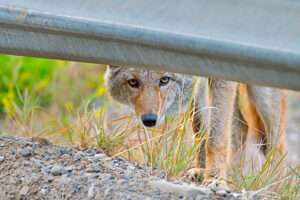
The Coyote Next Door
What urban wildlife can teach us about cognition, survival and how to be good neighbors. Standing in a thicket of poplars, surrounded by tangled brush and magpie chatter, there’s an air of wilderness. But reminders of the urban world beyond
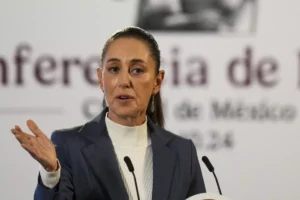
Opinion: Mexico’s new president should tackle the country’s festering human rights catastrophe
New President Claudia Sheinbaum can do more than her predecessor to resolve the disappearances and murders of Mexicans by gangs and past governments. (Fernando Llano / Associated Press) Every morning when I walk to the park across from my apartment
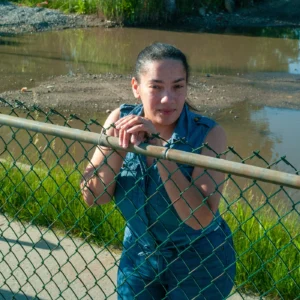
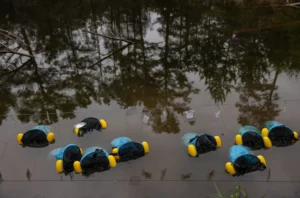
How Heavy Rains and High Tides Hurt Nyc’s Black and Brown Neighborhoods
Normally, Estefani Nuñez parks the small yellow school bus she drives each day by the side of her home in the Rosedale neighborhood in Queens. On the day before she knows it’s going to rain, she parks her school bus
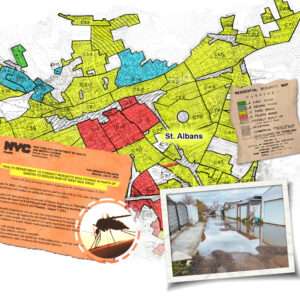
A climate change forecast: rain with a chance of mosquito-borne diseases
Decades before Elizabeth Blaney, now 84, moved to St. Albans, the neighborhood was shaded yellow on maps made by the federal government. The color yellow could mean there was a high number of immigrants—or that there was a possibility of

How Robots Helped My Parents’ Dementia
Forget the crappy caregiver bots and puppy-eyed seals. When my parents got sick, I turned to a new generation of roboticists—and their glowing, talking, blobby creations. This article first appeared in the January, 2024 edition of Wired. Her research was
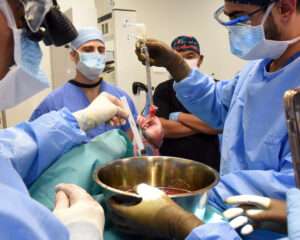
The Allure and Dangers of Experimenting With Brain-Dead Bodies
For scientists who perform medical research on the recently deceased, there are few regulatory or ethical guardrails. This article, written by Jyoti Madhusoodanan, is based on her 2023 Alicia Patterson Foundation fellowship research on human experiments and greater openness behind

Inside the audacious mission to bring a rare toad back from the brink


She Managed to get a Temporary Farmworker Visa

‘They Beat Me Like a Slave’: Signs of Violence in Sheriff’s Office Dated Back Years

Opinion | Are Embryos Property or People? Even the Courts Don’t Know

The Coyote Next Door


How Robots Helped My Parents’ Dementia
